 These Last Days News - March 5, 2026
We
encourage everyone to share this web page with others, especially bishops
and clergy.
Faith And The Middle East: How Religion Could Fuel A Wider War...
A WAR OF RELIGION
"You will find the world engrossed
in not only a worldly war of the flesh, but one of the spirit--a war of
religion." - Our Lady of the Roses, September 7,
1974
A RELIGIOUS WAR
"The battle, My child, will
accelerate very shortly for there will not only be a great war of weapons of
mankind, but it will be known soon throughout the world as a religious war."
- Our Lady of the Roses, August 21, 1974
The above Messages from Our Lady were given to Veronica Lueken at Bayside, New York. Read more
USAToday.com reported on March 5, 2026:
By Marc Ramirez
With their Feb. 28 strikes on Iran, the United States and Israel have stoked Middle East conflict as part of a campaign that President Donald Trump said could last weeks or longer, aiming to cut short what he called imminent nuclear threats from Iran and cripple its military programs.
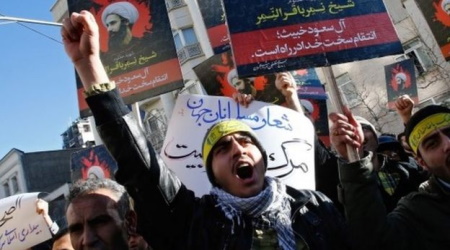
But the killing of Ayatollah Ali Khamenei, Iran’s supreme leader, in addition to ongoing instability, threatens to trigger a chaotic and drawn-out war involving Iranian and U.S. allies in the region and bring religious rhetoric and sectarian differences into play.
While not a religious conflict at its core, a widening regional war could see religion emerge as a galvanizing tool, said Nader Hashemi, director of the Alwaleed Center for Muslim-Christian Understanding at Georgetown University in Washington, D.C.
“Religion is not the driver of conflict in the Middle East,” said Hashemi, an associate professor of Middle East and Islamic politics at the school. “It’s the vehicle that is used to mobilize people in defense of political ideologies and causes.”
Hashemi said Khamenei’s killing has already stoked instability in many Muslim countries: Nearly two dozen protesters were killed in Pakistan, while demonstrations continue in Iraq, Bahrain, India and Lebanon.
“What’s lost in the eyes of the Trump administration is that the Supreme Leader, as brutal and despotic as he was, was also looked to by many Shia Muslims as a respected religious leader,” Hashemi said. “The fact that he was assassinated in the month of Ramadan just increases the level of anger that exists among his supporters. It would be the equivalent of somebody targeting the Pope during Easter.”
Tehran answered Saturday’s attacks with strikes on U.S. military bases in Saudi Arabia, Qatar, Bahrain, Iraq, Kuwait, Jordan and United Arab Emirates.
Though most of those nations have Sunni Muslim majorities in contrast to Iran’s vastly Shia Muslim population, “this is fundamentally a geopolitical conflict rooted in the desire by an authoritarian regime in Iran to stay in power after being brutally attacked and then lashing out at neighboring countries,” Hashemi said.
“People are not fighting over theological interpretations,” he said. “They’re fighting over questions of political power, regional domination and competing national interests.”
Here’s how religion in Iran and beyond could factor into the simmering conflict.
What is Iran's religious makeup?
About 90% of Iran’s almost exclusively Muslim population of 85 million are Shia Muslims. However, other Middle East Arab nations are mostly Sunni Muslims, according to the Strauss Center for International Security and Law, a nonpartisan research center at The University of Texas at Austin.
Iran’s constitution describes the country as an Islamic republic and specifies Twelver Ja’afari, the largest branch of Shia Islam, as its official state religion, according to the U.S. State Department. Laws and regulations are based on Islamic criteria.
As noted by the Center for American Progress, a nonpartisan policy institute in Washington, D.C., Twelvers believe in The 12 Imams, caliphs descended from the Prophet Muhammad, the last of whom they say will return and usher in an age of peace and justice.
Religious minorities constitute less than 1% of the country, but Christians, Jews and Zorastrians are the only ones allowed to worship, so long as they don’t include converts from Islam, the state department said.
What is Shia Islam?
Shiism grew out of a 7th-century break among Muhammad’s followers over who would succeed him as leader of the Muslim community, according to History.com. Some supported Ali Ibn Abu Talib, Muhammad’s cousin and son-in-law, insistent on adhering to the prophet’s family line; they were instead overruled, sparking decades of bloodshed and unrest between the two branches.
Those who supported Ali as Muhammad’s rightful heir, according to the site, became known as Ali’s followers. In Arabic, they were Shiat Ali – or Shia for short.
Shia Muslims account for about 170 million of the world’s approximately 1.3 billion Muslims, according to the Center for American Progress, but represent the majority of Muslims in Iran, Iraq and Bahrain.
What is Sunni Islam?
Sunni Islam is the religion’s largest branch in the Middle East, forming the majority of Muslims in nations including Saudi Arabia, Jordan, United Arab Emirates, Qatar, Kuwait and Turkey.
The name derives from the Arabic word sunna, or tradition. As noted by the Council on Foreign Relations, a nonpartisan think tank in Washington, D.C., Sunni Muslims believe the traditional succession of caliphs after Muhammad, starting with the Prophet’s friend Abu Bakr, is the correct one.
Despite their differences, Sunni and Shia Muslims have largely coexisted peacefully throughout their centuries-long history. However, the divide has occasionally fed bitter regional conflict and, more recently, rejuvenated jihadi networks that pose more far-reaching dangers, the council said.
Many disputes have erupted among Middle East nations not over religion but territory – for instance, when Iraq went to war with Iran in the 1980s.
“Certainly religion was used by both sides, but ultimately it was a territorial issue,” said Babak Rahimi, director of the Middle East Studies program at the University of California San Diego. “What we’re seeing now is not a Sunni-Shia situation. It’s completely geopolitical.”
How religion could impact prolonged war
Still, uncertain territory lies ahead. Trump told CNN “the biggest surprise” after the Feb. 28 attacks was Iran’s retaliation against its regional Arab neighbors, though many of those nations had expected such a response, Rahimi said.
“The Persian Gulf Arab states do not want this conflict,” he said. “They’re not looking at it from a religious perspective, they’re looking at it mostly from an economic and geopolitical security perspective.”
That doesn’t mean religion won’t enter the equation.
The U.S., too, has employed religious rhetoric in its cause, said Gregg Roman, executive director of the Middle East Forum.
“Trump is saying we have an obligation to make sure America is secure in the world,” he said. “There’s language being used by elected officials that implies not that there’s a religious imperative to do this but there are Judeo-Christian values that would justify it.”
U.S. War Secretary Pete Hegseth has been open about his ties to a hard-right Christian church coalition, and this week, the Military Religious Freedom Foundation said more than 200 American service members had filed complaints charging that U.S. military commanders had cited radical Christian rhetoric about biblical end times to rationalize the attack on Iran.
Meanwhile, Saudi Arabia’s senior religious cleric on Tuesday called on believers to support the war effort against Iran, framing it as a “jihad.”
“We’re seeing the beginnings of this,” Hashemi said. “I suspect if the conflict between Iran and its Arab neighbors deepens, you will see a resurrection of the Sunni-Shia divide. Religion has always been a tool for mobilizing people.”
Be sure to email this page to all your friends.
"The judgment of your God is not akin to the judgment of man. The Eternal Father will only judge by the heart. Your rank, your accumulation of worldly goods does not set you up before another. Many have sold their souls within the holy House of God. Better that you strip yourself and remove all worldly interests now while you have the time to make amends to your God, for many mitres will fall into hell." - St. Thomas Aquinas, August 21, 1972
 The
Virgin Mary's Bayside Prophecy Books are Now Available in E-book Version.
Click Here Now!
The
Virgin Mary's Bayside Prophecy Books are Now Available in E-book Version.
Click Here Now!
When you pray the Holy Rosary, you have Our Lady's hand in yours. When you pray the Holy Rosary, you have the power of God in your hands. Start now! Click here...
Our Lady of the Roses Awesome Bayside Prophecies... https://www.tldm.org/Bayside/ These prophecies came from Jesus, Mary, and the saints to Veronica Lueken at Bayside, NY, from 1968 to 1995.
Directives from Heaven... https://www.tldm.org/directives/directives.htm
D36 - Bishops (Part 1)
D37 - Bishops (Part 2)
D38 - Priests (Part 1)
D39 - Priests (Part 2)
D40 - Infiltrators

| Home - Latest News | Introduction | Bayside Prophecies | Directives from Heaven | Shopping Cart | Miracles & Cures | Veronica Lueken | Miraculous Photos | Bible | Radio Program | Bayside Videos |
The electronic form of this document is copyrighted.
Quotations are permissible as long as this web site is acknowledged with a
hyperlink to:
http://www.tldm.org
Copyright © These Last Days Ministries, Inc. 1996 - 2025 All rights
reserved.
P.O. Box 40
616-698-6448
Lowell, MI 49331-0040
Revised: March 05, 2026

