 These Last Days News - July 30, 2026
We encourage everyone to share this web page with others, especially bishops and clergy.
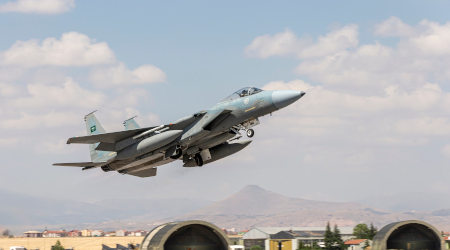
Saudi Arabia Enters Iran war: Who is on which Side in the Widening Middle East Conflict?
ISRAEL IN FLAMES
"Veronica - "... and there's another map. And I see Israel, and countries about it; they're all aflame...
The wars shall increase, and the carnage shall increase, and those who are living will often envy the dead, so great will be the suffering of mankind.... When he left the Eternal Father he turned to satan, and this is his reward." - Our Lady of the Roses, June 30, 1984
WAR IN THE MIDEAST
"Veronica - "There is a great war ahead. It will coincide with the war in the Mideast." - February 17, 1974"
The above Messages from Our Lady were given to Veronica Lueken at Bayside, New York. Read more
Msn.com reported on July 29, 2026:
Saudi Arabia has entered the widening Iran war, joining the United States in strikes on Tehran-backed militias in Iraq after months of trying to avoid direct involvement.
Saudi’s move followed attacks from multiple directions. Iran-aligned groups in Iraq have been accused of targeting Saudi territory with drones, while Yemen’s Houthis have attacked Saudi airports and threatened the kingdom’s oil tankers and Red Sea shipping routes.
The escalation brings Saudi Arabia into a conflict that began with US and Israeli attacks on Iran on February 28 and has since spread across military bases, oil facilities and shipping lanes in the Gulf, Iraq, Yemen and Jordan.
Yet Riyadh is still trying to avoid an open-ended war. Its aim is to deter attacks on critical infrastructure without undermining the economic stability needed for Crown Prince Mohammed bin Salman’s Vision 2030 programme.
So who is fighting whom, and why has Saudi Arabia entered the conflict now?
What Has Saudi Arabia Done?
The strikes marked Saudi Arabia’s first direct military intervention in the war. Saudi Arabia and the US on Tuesday carried out strikes on weapons and logistics facilities used by Iran-backed militias in Iraq.
The operation followed drone attacks on Saudi Arabia, including a reported strike on the strategically important Abqaiq oil-processing facility. Iran-aligned Iraqi groups have been accused of carrying out around 30 drone attacks on the kingdom.
A person familiar with Saudi Defence Minister Khalid bin Salman’s talks at the White House told the Associated Press that the strikes were meant to warn Iran and its proxies that Riyadh would not tolerate attacks on its oil industry or other vital infrastructure.
Prince Khalid met US President Donald Trump and Vice-President JD Vance and conveyed Crown Prince Mohammed bin Salman’s assessment that Iran had lost some influence in Syria and Lebanon but continued to support armed groups in Iraq and the Houthis in Yemen.
At the same time, he stressed that Riyadh wanted de-escalation and a return to US-Iran negotiations.
Who Is On Iran’s Side?
Iran and its Islamic Revolutionary Guard Corps (IRGC) sit at the centre of one side of the conflict. It is backed by armed groups across the region, though their roles differ.
In Iraq, factions within the Popular Mobilisation Forces have been accused of launching drones at Saudi Arabia. Their weapons and logistics sites were targeted in the joint US-Saudi operation.
The alleged attacks are particularly sensitive for Riyadh because the Abqaiq and Khurais oil facilities were struck from the north in September 2019, temporarily knocking out around half of Saudi oil production.
Satellite images showed that Abqaiq was struck again on Monday, the BBC reported.
In Yemen, the Iran-aligned Houthis control much of the country and possess ballistic missiles, drones and anti-ship weapons. They have attacked the Saudi airports of Abha and Jizan, threatened Saudi-linked vessels in the Red Sea and claimed to have fired ballistic missiles at a Saudi oil tanker.
The Houthis threaten Saudi Arabia from the south, while Iraqi groups can target it from the north. Hezbollah in Lebanon remains aligned with Iran but has kept a relatively low profile during the latest phase of the fighting.
Who Is Fighting Iran And Its Allies?
The US is the main military force confronting Iran.
American Central Command has troops, aircraft, naval forces and missile-defence systems deployed across the Middle East. It has carried out strikes on Iranian targets and allied groups while defending US bases and regional partners.
Iran recently said it fired ballistic missiles at Jordan’s Muwaffaq Salti Air Base, an important US military hub. Trump said the missiles were intercepted.
"They’ve already apologized, but, you know, we got to smack them a little bit," Trump told reporters. "It’s our turn, and we’ll see if we get there with an agreement at some point. But we’re going to hit them very hard."
Hours later, the US military announced "a powerful response to yesterday’s attempted Iranian attacks on U.S. forces based in the Middle East", without immediately disclosing the targets.
Jordan, Bahrain and Kuwait are broadly aligned with Washington and host or support US forces, although their roles differ. Iran has directed missile and drone attacks towards all three during the war.
Where Does Israel Fit In?
Israel helped launch the war against Iran alongside the US on February 28 but is not leading the latest round of operations.
Israeli Prime Minister Benjamin Netanyahu met Trump at the White House on Tuesday, shortly before the joint US-Saudi strikes. An Israeli official briefed on the meeting told AP that Netanyahu had assured Trump that Washington, rather than Israel, was directing the approach towards Iran.
However, Israeli officials are concerned that Trump may try to keep the war at a lower intensity because of rising oil prices, the approaching US midterm elections and pressure on American weapons stocks.
The fighting has further depleted US supplies of Patriot and THAAD missile interceptors, according to an analysis by the Center for Strategic and International Studies. US Patriot interceptor inventories have fallen to fewer than 1,000 missiles, while THAAD interceptor stocks stand at about 250 after months of fighting with Iran.
Why Is Saudi Arabia’s Oil Trade At Risk?
Iran has effectively restricted commercial traffic through the Strait of Hormuz, a route through which about 20 per cent of the world’s oil and liquefied natural gas previously passed.
Saudi Arabia has responded by pumping around five million barrels of oil a day through its east-west pipeline to the Red Sea port of Yanbu.
From there, tankers can travel through the Bab el-Mandeb Strait towards Asian markets.
But Houthi attacks on Saudi shipping now threaten that alternative route. If Hormuz remains restricted and the Bab el-Mandeb becomes unsafe, Saudi exports could face pressure on both sides of the Arabian Peninsula.
Why Does Riyadh Want To Avoid A Larger War?
Saudi Arabia’s Vision 2030 programme depends on foreign investment, tourism, technology projects and industries intended to reduce its dependence on oil.
A prolonged war would threaten airports, ports, energy facilities and data centres while disrupting trade and deterring investors.
Riyadh is also wary of being drawn back into war with the Houthis. Saudi Arabia spent years leading a military campaign in Yemen but failed to defeat the group.
An uneasy truce reached in 2022 reduced cross-border attacks, but the Iran war has placed that arrangement under renewed strain.
Saudi Arabia is therefore pursuing deterrence and de-escalation at the same time: striking groups it believes are attacking the kingdom while urging the US and Iran to resume negotiations.
Can Diplomacy Still Stop The War?
The diplomatic track appears stalled.
Trump and his allies have claimed that Iran wants to return to negotiations. However, Iran’s deputy foreign minister said it had made no request to restart talks for more than two weeks.
A senior US official told AP that Washington was not actively pursuing negotiations and that direct diplomacy was unlikely to resume soon.
Mistrust has deepened since an interim understanding reached in June collapsed.
Ali Vaez, Iran project director at the International Crisis Group, said senior Iranian officials had initially supported that arrangement.
"But now none of them believe that Trump is a reliable negotiating partner," he told AP. "The problem, I think, is that Trump also has now the same impression about the Iranians."
Saudi Arabia must now decide how far it is prepared to go if attacks from Iraq and Yemen continue, while trying to avoid the broader regional war it has spent months attempting to escape.
Be sure to email this page to all your friends.
MAN SUBMITS HIS WILL TO SATAN
"Your earth will be cleansed by a baptism of fire. In this way We shall separate the sheep from the goats. Wars are a punishment for man's sins. They will never end as long as man submits his will to satan." - Our Lady of the Roses, August 14, 1972
THIRD WORLD WAR
"The Third World War shall start soon, My child, and claim many lives. Many countries shall disappear from the surface of your earth. Wars are a punishment for man's sins, My child." - Our Lady of the Roses, April 5, 1975
 The Virgin Mary's Bayside Prophecy Books are Now Available in E-book Version. Click Here Now!
When you pray the Holy Rosary, you have Our Lady's hand in yours. When you pray the Holy Rosary, you have the power of God in your hands. Start now! Click here...
Our Lady of the Roses Awesome Bayside Prophecies... https://www.tldm.org/Bayside/ These prophecies came from Jesus, Mary, and the saints to Veronica Lueken at Bayside, NY, from 1968 to 1995.
Directives from Heaven... https://www.tldm.org/directives/directives.htm
 PDF
PDFD136 - Visions of the Great War: The Mideast
PDFD156 - Terrorism
PDFD158 - America the Beautiful
PDF