 These Last Days News - August 13, 2026
We encourage everyone to share this web page with others, especially bishops and clergy.
First-Year Classes this Fall Range from Wonder Woman to ‘Queer’ Art to the Occult...
SCHOOL OF EVIL
"Your children must be protected from the evils that abound in your school systems in your country and most nations throughout the world. They are being taught immorality and a loss of faith in the supernatural and the knowledge of their God. All manner of heresy has been indoctrinated into their youthful minds. It is a diabolical plan of Lucifer." - Our Lady of the Roses, June 18, 1979
NO ESCAPE
"Children! The dear children, what will become of them? What kind of an example is being set in their homes? Parents who lack the light, how can they guide their children? Send them to schools? That will be no escape, for the children will be ensnared with evil." - Jesus, April 14, 1984
The above Messages from Our Lady were given to Veronica Lueken at Bayside, New York. Read more
Thecollegefix.com reported on August 13, 2026:
ANALYSIS: Trends include classes that link pop culture to identity politics and seminars on dark supernatural
Universities around the country plan to welcome new students this fall with first-year seminars on a variety of topics, from the science of swear words to the symbolism of vampires to feminism and Wonder Woman.
Most large schools offer dozens of possible first-year or freshman seminars to choose from. These classes tend to be one-credit offerings on niche topics designed to ease new students into collegiate studies.
Pop culture, often linked to identity politics, is a common theme this year.
The University of Nebraska honors college lets students select a course called "Wonder Women on Screen: America’s Female Action Heroes." The class invites students to dive into why movie studios have rejected female-centered superhero movies.
In studying 20th and 21st century female superheroes, students "will examine these figures in comparison to their male counterparts and traditional heroic archetypes, and consider female action heroes within the context of the evolution of feminism(s) and changing attitudes about women’s strength, abilities, and roles in society," the course description states.
The Nebraska public university also offers a class called "Gender, Sex, and Race on Trial: Famous Legal Cases on Film."
Students will learn about famous legal trials in American history and then analyze movie versions of those trials. Importantly, each trial students study is one "where sex, gender, race/ethnicity, or disability of a primary character is integral to the legal action," the course description states.
In a University of Iowa class, "Interpreting Video Games," students will play seven video games and analyze them. The course description states it encourages students to think critically about "video games as artistic, political, controversial, and advocative cultural media."
Another class, "The Interdisciplinary Science of Swearing" is offered by the University of Washington to its first-year students. In the course, students will "explore the often-overlooked science behind profane language."
The goal of the course is to learn why curse words sound the way they do, to discover their history, and to discern the differing ways they are used across various cultures. The description pitches the class to students as one which "explor[es] a topic that is both academically rigorous and personally relevant."
Another predominant topic among first-year seminars was LBGTQ+ ideology.
One seminar the University of Minnesota offers is called "Playing with Genders: How Arts Inform Our Everyday Genders, a Case Study in Japanese Arts." Pointing to societal debate over what gender means, the course description says "gender is not a way of ‘being’—but more a way of ‘doing.’"
The class names the arts as a way "gender performance" can grant insight into "everyday concepts of gender." To explore this theme, the "seminar focuses on the gender performance of Japanese literature and theater (in English) as a ‘case study’ due to Japan’s highly formal cultural traditions and their rich ‘cross-gender’ performing arts."
The University of Wisconsin also is offering a first-year seminar called "The Queer 20th Century in Art and Activism." The course tracks the growth of the American LGBTQ+ movement through the lens of "queer arts." The description notes that the class will appeal to those interested in LGBTQ+ history and those who are curious about how self-representation has evolved over time.
A focus on the dark supernatural also cropped up as a trend.
At Tulane University, students can take "Ancient Magic, Modern Witchcraft." The course will guide students in studying magic as it was practiced in ancient "Mesopotamia and biblical Israel" and as it is currently practiced, particularly in New Orleans.
"Students will learn the skills necessary to succeed at a rigorous university (such as close reading, academic writing, and class participation) while exploring topics such as demonology, illness, prayer, exorcism, and witchcraft," the description states.
Ohio State University lets students take a class called "THE VAMPIRE: Bodies, Belonging, and Identity." The description states that "students will be introduced to introductory disability studies terminology then reflect how vampire stories reflect cultural anxieties about bodies that are different, dependent, or deviate outside socially constructed definitions of ‘normal.’"
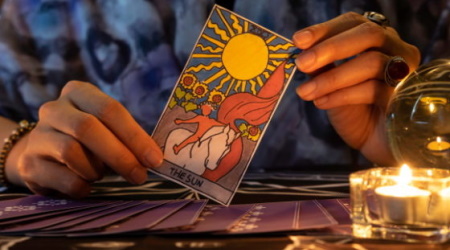
Another example, "Alternative Spiritualities: The History and Practice of Tarot and Reiki" is offered at Rutgers University. The course combines current "wellness" techniques and "new-age mysticism" practices such as divination.
"Students will gain guided, experiential exposure to Tarot card-reading methods and Reiki-inspired energy-work activities, which we will respectfully approach as cultural and historical practices," the description reads.
More examples include "Feminist Fairy Tales" at Ohio State, "A Dark Rock Surged Upon: Navigating Race, Class, and Gender in College" at Northwestern University, "Race and Place in British New Wave, K-Pop, and Beyond" at Yale University, and "Ethics of Star Trek" at Penn State University.
Many first-year seminar classes cover traditional higher education subjects. But one scholar expressed concern about the "frivolous" topics that often pop up in course lists nowadays.
"Frivolous freshman seminars indulge students—and faculty members—in their immaturity," Adam Kissel, a visiting lecturer at Trinity College in Hartford, told The College Fix. "Such courses waste taxpayer subsidies and student tuition."
Kissel is co-author of the 2025 book "Slacking: A Guide to Ivy League Miseducation," which draws attention to the dilution of substantive education at prestigious universities. He also is a visiting fellow in The Heritage Foundation’s Center for Education Policy.
He pointed out that the prevalence of so much "curricular rot" can be attributed to schools neglecting to teach students the knowledge which is foundational to civilization. This knowledge is something "an educated person ought to have," he told The Fix in a recent email.
Public universities across the United States are failing to deliver the formational knowledge the next generation needs, Kissel said. He called on state legislators and trustees to ensure students receive an education "in what Matthew Arnold called ‘the best that has been thought and said in the world.’" He pointed to Florida and Texas as instances where this happened successfully.
Kissel is not without hope for the future of American schools. He noted that the classical education movement is growing rapidly among schoolchildren, resulting in more young people coming to college with a classical education.
"We might see a much greater market for high-quality college courses as these young students graduate," he said.
Be sure to email this page to all your friends.
FAMILY CIRCLE
"I say families must be strong in this age of sorrow, this age of darkness. It is the family, within the family, that the children must be taught. Do not depend upon your schools, for they have been infiltrated with evil. Do not depend upon your neighbors, for they are often caught up in the world of satan." - Jesus, June 18, 1987
 The Virgin Mary's Bayside Prophecy Books are Now Available in E-book Version. Click Here Now!
When you pray the Holy Rosary, you have Our Lady's hand in yours. When you pray the Holy Rosary, you have the power of God in your hands. Start now! Click here...
Our Lady of the Roses Awesome Bayside Prophecies... https://www.tldm.org/Bayside/ These prophecies came from Jesus, Mary, and the saints to Veronica Lueken at Bayside, NY, from 1968 to 1995.
Directives from Heaven... https://www.tldm.org/directives/directives.htm
 PDF
PDFD158 - America the Beautiful
PDFD224 - Restore America to One Nation Under God
PDF